Introduction
Travel drains your iPhone fast. Maps, photos, boarding passes, rideshare, music, and translation apps hammer the battery before lunch. The right portable charger keeps you moving and calm when outlets are scarce. This guide shows how to pick the best iPhone portable charger for travel, explains specs in plain language, and shares field-tested tips to avoid low-battery panic. We focus on charge speed, usable capacity, comfort in a pocket or sling, and airline rules that matter at security. You will see quick recommendations, then a buying framework that translates numbers on a box into real charges on the road. We also break down wired versus MagSafe, what wattage your iPhone actually uses, and how to optimize cables, heat, and efficiency. Use the scenarios to match a charger to your trip and pack list. By the end, you will know exactly what to buy, how to fly with it, and how to keep it running trip after trip.
Our Top Picks at a Glance
A fast snapshot helps you narrow the options before diving into the deeper selection criteria below.
Best Overall iPhone Travel Power Bank
Choose a slim 10,000 to 12,000 mAh USB-C PD bank with 20 to 30 W output, two ports, and reliable safety protections. It balances size and stamina, gives one to two full phone refills, and slips in a jacket pocket.
Best MagSafe Battery Pack for iPhone Travel
Pick a 5,000 to 10,000 mAh magnetic pack with strong alignment, 7.5 to 15 W wireless output, and USB-C input and output. It is ideal for cable-free top-ups while walking to the gate or switching trains. Expect slower speeds than wired.
Best Compact Ultra-Light Charger
A lipstick-size 5,000 mAh bank or a 2 in 1 wall charger plus power bank combo is perfect for city breaks. It weighs little, refuels your phone over coffee, and disappears in a small crossbody bag.
Best High-Capacity for Long Hauls
A 20,000 to 26,800 mAh bank under airline limits with 30 to 45 W PD handles long days and shares power with an iPad or small laptop. It is heavier, but for long flights and layovers, the extra capacity is worth it.
Best Budget Travel Power Bank
A dependable 10,000 mAh USB-C PD bank with 18 to 20 W output and a clear LED readout offers excellent value. It lacks premium materials, yet delivers steady charging and peace of mind at a friendly price.
How to Choose the Right iPhone Travel Charger
You have a sense of what fits your style. Now translate your itinerary into specs that deliver comfort, speed, and safety without extra bulk.
Capacity (mAh) and Real-World iPhone Charges
Capacity on the label rarely equals what you get. Expect roughly 60 to 75 percent of the rated mAh as usable due to voltage conversion and heat. A 10,000 mAh bank often delivers about 1.8 to 2.5 full charges, depending on your iPhone model, screen time, and background tasks. If you shoot video, navigate all day, or tether, move up a tier for margin. For weekend trips, 10,000 mAh is a sweet spot. For multi-leg travel with heavy use, 20,000 mAh reduces anxiety.
Power Output and USB-C PD Wattage
Aim for 20 to 30 W USB-C Power Delivery for speedy top-ups. iPhones draw the most benefit around the low to mid battery range, where 20 to 27 W cuts downtime dramatically. Higher wattage helps if you also charge a tablet or small laptop. If you only charge an iPhone, 20 W is enough; if you share or multitask devices, 30 W adds flexibility.
Fast-Charge Compatibility for iPhone 15/14/13
All recent iPhones support fast wired charging through USB-C PD, and iPhone 15 uses USB-C natively. Look for PD 3.0 support and good regulation. PPS can help with some accessories but is not essential for iPhone. MagSafe wireless caps out lower than wired and loses more energy to heat. Keep a short, high quality cable to unlock full wired speed when you need it.
Port Selection: USB-C, USB-A, and Pass-Through Charging
A single USB-C PD port is the baseline. A second port lets you share or top up an accessory. Many travelers appreciate pass-through charging at the hotel: plug the bank into the wall, then connect your phone to the bank to charge both overnight. If you carry an Apple Watch, consider a bank with a second port or add a tiny USB-C watch puck.
Size, Weight, and Pocketability on the Go
If it is too heavy, you will leave it in the room. Choose a form factor that fits your pocket, sling, or belt bag. Slim banks sit flat in a passport pouch and feel invisible. Curved edges help when you hold the phone and bank together during a quick top-up while queuing.
Safety Features and Certifications (UL, CE, FCC)
Quality cells and smart protection matter. Look for temperature control, over current and over voltage protection, and short circuit safeguards. Reputable markings add confidence, and a brand with published specs and support helps if travel plans go sideways.
Wired vs. MagSafe: What’s Better for Travel?
Once you lock in capacity and output, decide how you want power to reach the phone. Different days call for different tools, and sometimes the best answer is to carry one of each.
Pros and Cons of MagSafe Battery Packs
Pros:
– Snaps on fast with no cable
– Easy one handed use while navigating
– Clean and compact for pockets and small bags
Cons:
– Slower than wired
– Lower efficiency means less usable capacity
– Adds thickness behind the phone, which may affect grips or mounts
Pros and Cons of Wired Power Banks
Pros:
– Fastest and most efficient charging
– Best capacity per ounce
– Flexible for multiple devices
Cons:
– Cable management in tight spaces
– Slightly less elegant when moving through crowds
When It Makes Sense to Pack Both
Take a small MagSafe pack for on the go sips and a mid size wired bank for bulk charging on trains, planes, and at hotels. The wireless pack keeps you light between gates. The wired bank resets your battery fast at seats and during meals.
Airline and Travel Rules You Should Know
With a connection method chosen, make sure your power bank clears security and flies within airline limits. A few numbers and habits prevent delays and repacking at the checkpoint.
TSA/FAA Limits for Lithium Batteries in Carry-On
Keep power banks in carry-on, not checked bags. Most airlines allow up to 100 Wh without prior approval. Between 100 and 160 Wh may require permission, and above that is generally not allowed. Standard travel banks stay well under the 100 Wh threshold.
International Considerations and Watt-Hour (Wh) Math
Airlines state limits in watt hours. Convert using: Wh = mAh × 3.7 ÷ 1000. A 10,000 mAh bank is about 37 Wh. A 26,800 mAh bank lands near 99 Wh, which fits under common limits. Check your airline and any connecting carriers, especially on international itineraries.
Packing and Security Screening Tips for Smooth Travel
Place chargers and cables in an easy access pouch. Label capacity on the bank if the print is small. Remove the bank if asked and keep a short cable handy to show it functions. This routine speeds screening and reduces questions.
Charging Speed and Efficiency Explained
You have confirmed your bank can fly. Next, optimize how quickly it refuels your phone and how much of its capacity actually reaches the battery.
20W vs 30W vs 45W: What iPhone Actually Uses
Recent iPhones pull near their peak when the battery is low, then taper to protect health. In practice, 20 to 27 W covers almost all iPhone fast charging needs. Jump to 30 W if you also charge an iPad or want faster top ups when sharing. Anything above 30 W is mostly about versatility with non iPhone devices.
Cable Quality, E-Mark Chips, and Real Speed
Cables throttle or unleash speed. Use certified USB-C cables rated for the wattage you need. E marked cables shine at higher power levels and better durability. Pack a short 0.5 to 1 ft cable for less resistance, less tangling, and better efficiency in tight spaces like plane seats and rideshares.
Heat, Efficiency Loss, and Why Banks Rarely Deliver 100 Percent Capacity
Every conversion wastes energy as heat. Wireless adds more loss due to alignment and distance. Keep the phone and bank in open air while charging. Avoid charging under a jacket or stacked with other hot electronics. Wired USB-C PD with a short cable remains the most efficient way to squeeze the most runtime from the same capacity.
Real-World Travel Scenarios and Recommendations
Now put the numbers to work. Use these situations to pick the right setup and pack with confidence.
Weekend City Break: Light and Fast
Carry a 5,000 to 10,000 mAh bank or a MagSafe pack for cable free convenience. You will roam museums, shoot photos, and call rides without babysitting battery levels. Recharge the bank overnight. For couples, a slim 10,000 mAh with two ports lets you share in a pinch.
Week-Long International Trip: Dependable All-Rounder
Choose a 10,000 to 20,000 mAh USB-C PD bank with 20 to 30 W output. It fits airline limits, refuels quickly during transfers, and can top up earbuds, an Apple Watch dock, or an iPad mini. Pair it with a compact GaN wall charger so you can refill everything from one outlet in older hotels.
Theme Parks, Festivals, and All-Day Events
Go with a slim 10,000 to 12,000 mAh bank and a short cable. Wired charging saves time in lines and during meals. Keep the bank in a belt bag and the cable routed to your phone for hands free charging while walking. Wireless is convenient but less efficient during long, high usage days.
Remote Work Days and Long Airport Layovers
Pick a 20,000 mAh bank with 30 to 45 W PD and at least two ports. It powers your iPhone, a tablet, and can nudge a compact laptop. Sit near an outlet when possible and top up the bank while you work. This reduces stress if the next gate has few plugs.
Accessories to Pair with Your Travel Charger
The right accessories turn a good charger into a complete, tidy kit. A few smart adds keep your tech simple, fast, and ready.
Short USB-C to USB-C and USB-C to Lightning Cables
Carry one short primary cable and one spare. iPhone 15 uses USB-C, while older models may need USB-C to Lightning. Short cables waste less energy and tangle less in tight seating. Replace worn cables before travel.
Travel Wall Charger with Multiple Ports
A 30 to 45 W compact GaN wall charger with two or three ports lets you refill your bank and phone at the same time. In older rooms with a single outlet, one small charger prevents a nightly queue of dead devices.
Travel Cases, Cable Organizers, and AirTags
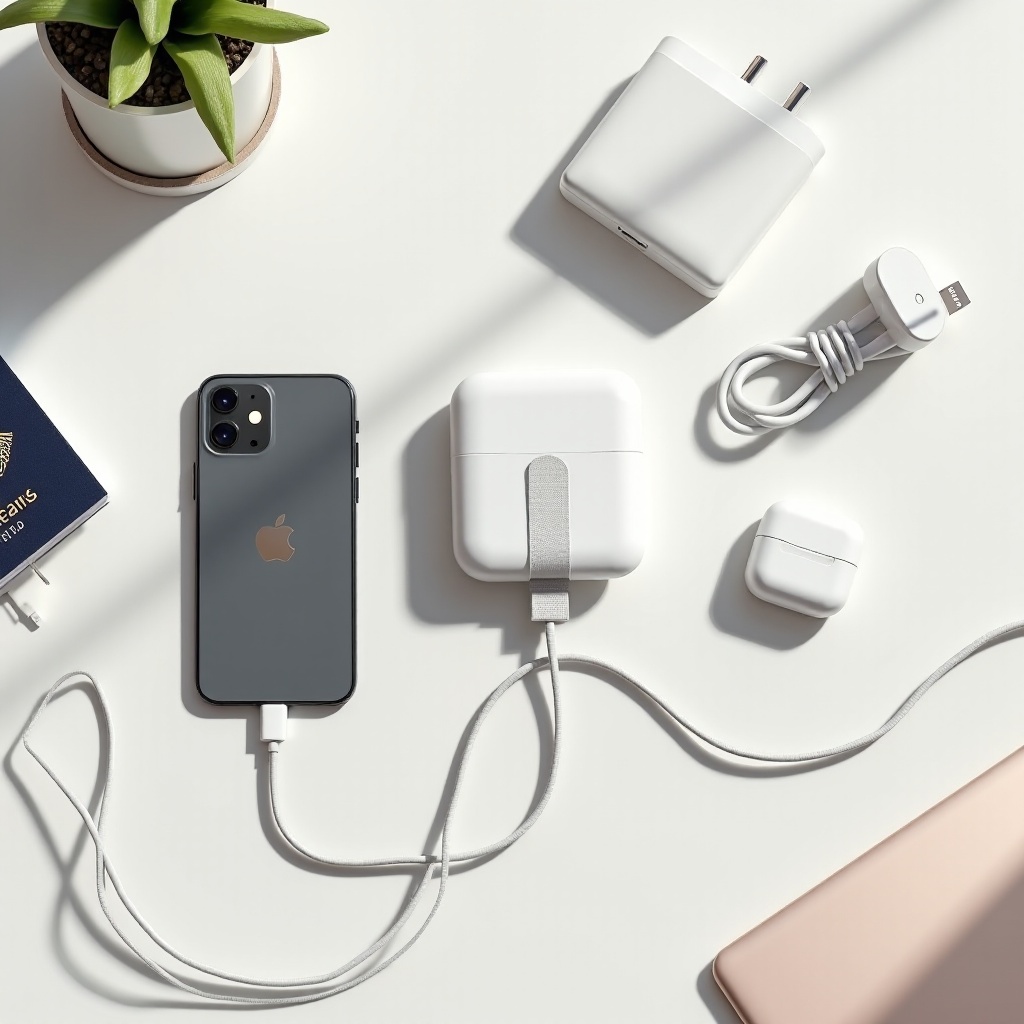
Use a slim pouch to keep the bank, cables, and wall charger together. Color code or label cables so you spot the right one fast in low light. An AirTag in your tech pouch helps track it through busy terminals and hotels.
How We Test and Compare Portable Chargers
Method matters. We validate claims with repeatable tests so our picks reflect real travel use, not just spec sheets.
Capacity Discharge Tests and Wh Conversion
We fully charge each bank, then discharge it at set loads that mimic phone charging. We measure delivered watt hours and compare them to the rated capacity. We repeat across wired and wireless to quantify the efficiency gap.
Cycle Life, Build Quality, and Drop Tests
We cycle charge and discharge to track early degradation. We open units when possible to inspect cells and internal build. Finally, we perform waist height drops to ensure ports, cases, and buttons survive the bumps of real travel.
MagSafe Alignment, Hold Strength, and Efficiency
We test magnet strength and alignment across recent iPhones with and without cases. We log heat and speed to show the trade off between convenience and loss. The results inform when wireless is great and when wired wins.
Maintenance, Safety, and Longevity Tips
Good care keeps your bank safe and strong. Small habits extend life and reduce the risk of issues on the road.
Ideal Storage Charge Levels and Usage Cadence
If you will not travel for a while, store the bank around 40 to 60 percent and top it up monthly. Lithium cells prefer partial cycles. Avoid leaving a bank fully depleted for long periods.
Avoiding Extreme Temperatures and Swelling
Keep banks out of hot cars, direct sun, or a tight pocket during intense activity. Do not charge under pillows or blankets. If you notice swelling or unusual heat, retire the bank and recycle it at a proper facility.
Cleaning Ports and Preventing Cable Fray
Dust and lint collect in ports. Brush them gently with a soft tool. Coil cables loosely and avoid sharp bends. Replace any cable that shows exposed wires or intermittent connections.
Conclusion
A smart travel setup blends convenience, speed, and safety. For most people, a 10,000 to 12,000 mAh USB-C PD bank hits the balance: light enough to carry all day, strong enough to cover heavy use, and fast enough to top up during short breaks. Add a small MagSafe pack if you love cable free charging while moving. Stay under airline watt hour limits, pack a quality short cable, and follow simple care habits. With the best iPhone portable charger for travel in your bag, your phone becomes a reliable tool again for maps, photos, tickets, and messages without the constant search for a wall socket.
Frequently Asked Questions
What size power bank is allowed on planes in 2024?
Most airlines allow power banks up to 100 Wh in carry-on without approval. Between 100 and 160 Wh may need airline permission. Keep batteries out of checked bags and pack them for easy inspection.
Is a MagSafe battery pack enough for a full day of travel?
A 5,000 mAh MagSafe pack is great for quick top-ups and convenience, but it charges slower and with more loss than wired. For heavy use, pair it with a 10,000 to 12,000 mAh wired bank to guarantee a full day.
Do I need a USB-C power bank for an iPhone 15 when traveling?
Yes. iPhone 15 uses USB-C and supports USB-C PD fast charging. A 20 to 30 W USB-C bank with a short, quality cable delivers quick top-ups, better efficiency than wireless, and fewer adapters to manage.