Introduction
Choosing the best qled 65 inch tv means balancing brightness, contrast, motion, and smart features without overspending. QLED sets thrive in bright rooms, deliver strong HDR punch, and resist burn risk. Mini LED backlights now push QLED performance further with tighter local dimming and better control of blooming. Gamers gain smooth 4K at high frame rates with low lag, while movie lovers get rich color and crisp highlights.
This guide gives you clear picks for common needs, then shows you how to judge core specs like brightness, local dimming, and motion handling. You will also learn which HDMI features matter, how smart platforms differ, and what to expect from current firmware support. I include setup tips that raise picture quality in minutes and practical advice on when to buy for the best price. Each section connects so you can move from a shortlist to a confident purchase plan. If you want a living room centerpiece that excels with movies, sports, and games, a well chosen 65 inch QLED can handle it all without fuss.
To start fast, use the quick picks below. Then dig into the buying guide to confirm the right fit for your room and habits.
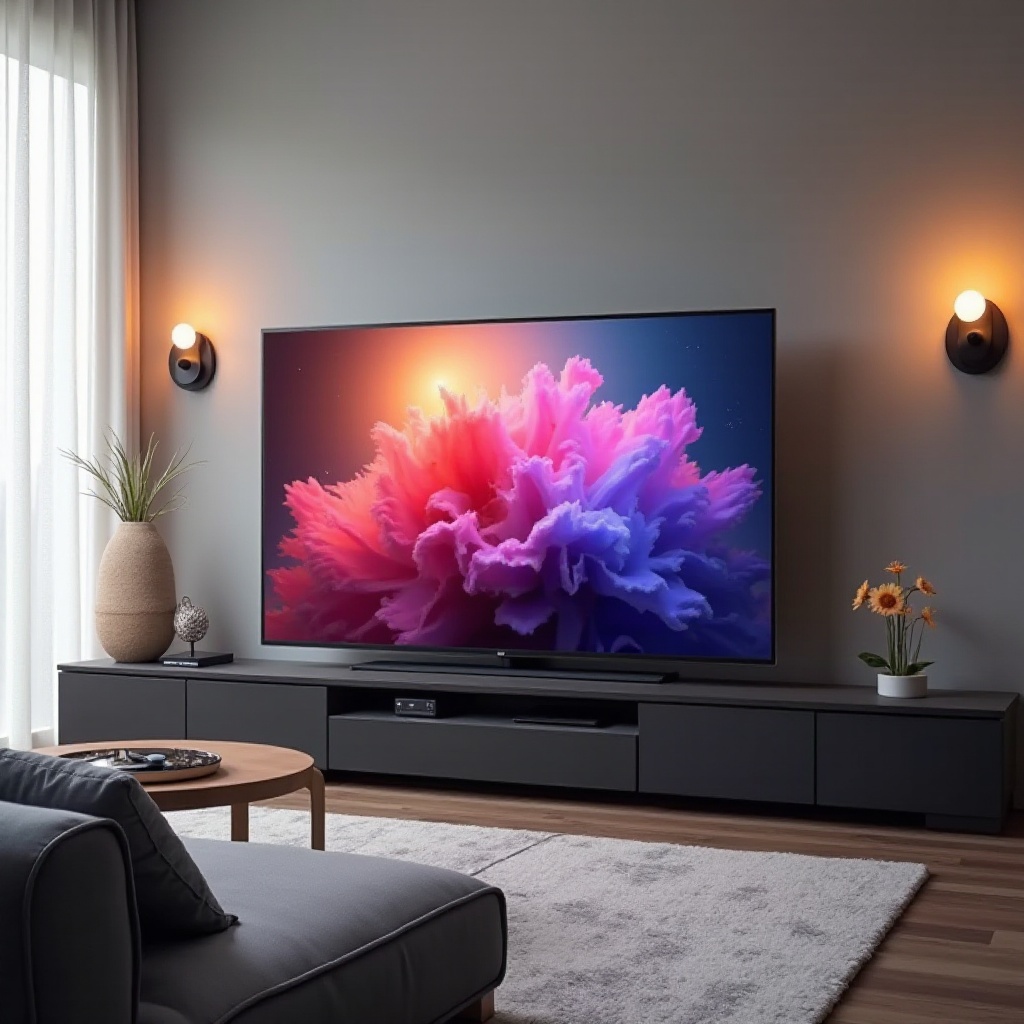
Quick Picks: The Best 65-Inch QLED TVs for Every Budget and Use Case
Start with a category that matches how you watch. Each pick type below points to a proven balance of features and value.
Best overall 65-inch QLED
Choose a flagship Mini LED QLED with high peak brightness, many dimming zones, and accurate color. Expect bold HDR, refined motion, strong anti reflection, and wide app support. Look for four HDMI ports with at least two at 2.1, plus eARC for clean audio passthrough. This is the set that does everything well in most rooms.
Best value 65-inch QLED
Pick a midrange model that reaches around 1,000 to 1,500 nits in HDR, offers a native 120 Hz panel, and has solid dimming. You get smooth sports, punchy movies, and low input lag without paying top dollar. Two HDMI 2.1 ports and a reliable smart OS cover gamers and streamers. This is the smart buy for most homes.
Best for gaming (4K/120, VRR)
Prioritize at least two HDMI 2.1 ports, 4K at 120 Hz, VRR, and ALLM. Game Mode should keep local dimming active for deep blacks without heavy blooming. Seek low input lag, quick UI, and a gaming dashboard that surfaces settings fast. If you also use a PC, check for 144 Hz input and G SYNC Compatible or FreeSync Premium Pro.
Best for bright rooms and sports
Get a high brightness panel with advanced anti glare and a wide angle layer. A native 120 Hz panel and smart motion controls keep fast action clean without a heavy soap effect. High sustained brightness keeps daytime scenes vivid, while strong reflections handling prevents washed out blacks. Perfect for open plan living spaces.
Best smart TV experience
Choose a TV with a fast, uncluttered OS, deep app library, and long update support. Voice control should be quick and reliable, with Chromecast built in or AirPlay for easy casting. Smooth navigation, stable app performance, and frequent firmware updates matter more over time than flashy menus.
With those categories set, it is time to learn the core traits that separate an average panel from a great one.
What to Look For in a 65-Inch QLED TV
Specs can overwhelm, but a few pillars decide real world quality. Focus on panel tech, brightness, dimming, motion, and HDR support.
QLED vs OLED vs Mini-LED
QLED uses quantum dots to produce vibrant color with an LED backlight. It shines in bright rooms and often costs less for large sizes. OLED delivers perfect pixel level blacks and superb contrast in dark rooms but can be dimmer in sunlight. Mini LED enhances QLED by packing more, smaller LEDs behind the panel for better local dimming and higher peak brightness. For mixed use and daytime viewing, Mini LED QLED often strikes the best balance.
Brightness, local dimming, and contrast
HDR lives on brightness. Peak brightness makes highlights sparkle, while sustained brightness stops long scenes from dimming. Local dimming splits the backlight into zones that darken or brighten independently. More zones, paired with smart algorithms, reduce halos and reveal shadow detail. Strong dimming can make letterboxed movies look closer to OLED in a dark room.
Motion handling: 120 Hz, BFI, and interpolation
A true 120 Hz panel cuts blur and reduces judder for sports and games. Black Frame Insertion can sharpen motion but may reduce brightness and introduce flicker. Use motion interpolation sparingly for sports while turning it off for movies to avoid the soap opera look. Check that the TV handles 24 fps content cleanly for film.
HDR formats: HDR10, HDR10+, Dolby Vision
Most content uses HDR10. HDR10 Plus and Dolby Vision add scene by scene metadata for better tone mapping. Many sets with great brightness and tone mapping make HDR pop even without Dolby Vision. If you stream often, Dolby Vision can be a perk, but do not trade a bright, well dimmed panel for a weaker set that simply lists more formats.
Viewing angles and anti-glare coatings
VA panels deliver excellent contrast but have narrower viewing angles than IPS or panels with wide angle layers. If your seating spreads across the room, consider a model with a wide angle film. High grade anti reflection coatings cut mirror like glare and help preserve black levels in sunlight. This matters a lot in rooms with large windows.
Understanding these traits sets you up to assess ports and gaming features that may influence your daily use.
Connectivity and Gaming Features That Matter
Ports and standards define how you plug in consoles, streamers, and audio gear. Verify bandwidth and features before you buy to avoid cable swaps later.
HDMI 2.1 bandwidth, 4K/120, VRR, and ALLM
HDMI 2.1 unlocks 4K at 120 Hz, Variable Refresh Rate, and Auto Low Latency Mode. Gamers should aim for at least two HDMI 2.1 ports so a console and a PC or second console can stay connected. Even if you do not game, HDMI 2.1 often arrives with better processors and eARC support, which helps long term.
Input lag, response time, and black frame insertion
Low input lag keeps controls snappy. Fast response times reduce blur around moving objects. In Game Mode, the best QLEDs keep local dimming active to preserve contrast without smearing bright objects. BFI can improve clarity in some games, but test it for flicker and brightness loss.
eARC for soundbars and AVR setups
Enhanced Audio Return Channel passes higher bandwidth audio back to your receiver or soundbar. That means Dolby TrueHD and object based Atmos tracks from discs and some apps. Use certified Ultra High Speed HDMI cables and connect your AVR or soundbar to the TV port marked eARC.
144 Hz and PC gaming considerations
Some QLEDs accept 4K at 144 Hz over HDMI. PC users should also check for 4:4:4 chroma support for sharp text and UI elements. Adaptive sync support, like FreeSync Premium Pro or G SYNC Compatible, keeps frames smooth without tearing.
With connectivity set, the next factor is how the TV software and ecosystem fit into your daily routine.
Smart Platforms and Ecosystem Fit
The operating system shapes everyday use as much as picture quality. A fast, stable platform saves time and frustration.
Tizen, Google TV, and Fire TV: apps and updates
All three platforms carry the major apps. Google TV offers strong content discovery and seamless casting. Tizen remains fast with broad app support and smooth animation. Fire TV integrates Alexa and offers deep Prime features. Update cadence and long term app support matter for longevity, especially if you keep your TV several years.
Voice assistants, casting, and smart home control
Check whether the TV supports Google Assistant, Alexa, or integrates with Siri via AirPlay and HomeKit. Casting should be instant with Chromecast built in or AirPlay. If you run smart lights, thermostats, or routines, make sure the TV slots into your ecosystem without extra hubs.
Privacy settings and performance over time
During setup, review privacy controls and limit ads or data sharing where possible. Performance should stay smooth as apps grow heavier, so a capable CPU, GPU, and enough memory help. Regular firmware updates can refine HDR tone mapping, motion, and app stability over time.
Once you understand the platform fit, you can match models to your needs with confidence.
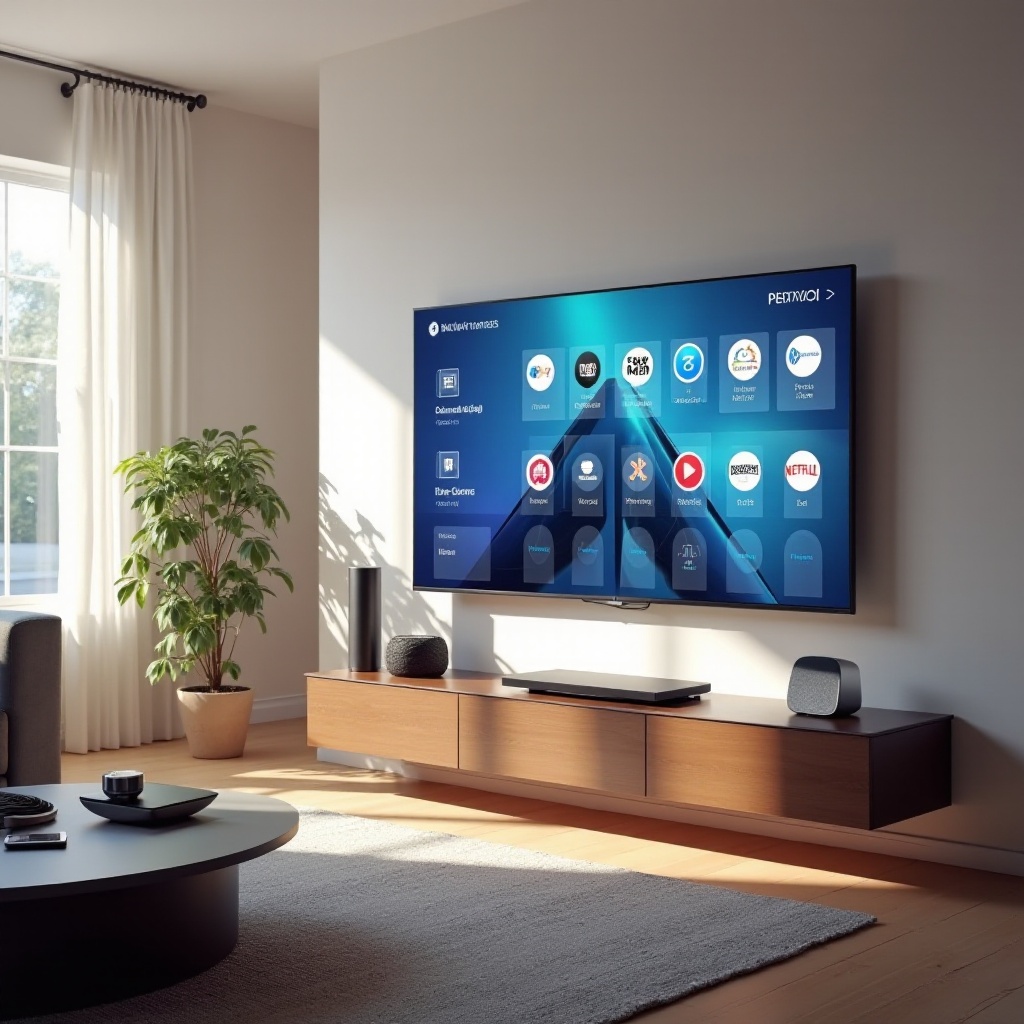
Our Top 65-Inch QLED Recommendations in 2026
Use these archetypes to align features and price with your priorities.
Premium Mini-LED QLED: best overall
A flagship Mini LED QLED pairs very high peak brightness with dense local dimming zones. Expect crisp HDR specular highlights, deep blacks, and controlled blooming in dark scenes. Anti reflection layers keep contrast in bright rooms. Four HDMI ports, robust eARC, and a refined OS round out the package.
High-brightness QLED: best for bright rooms
This model type focuses on sustained brightness and top tier anti glare. It maintains punchy contrast in daylight and delivers smooth motion at 120 Hz for sports. A wide angle layer helps when friends sit off to the side on game day. You get a vibrant image without dimming the room.
Midrange standout: best value pick
A balanced midrange QLED targets key wins first: solid brightness, effective local dimming, and 120 Hz. Two HDMI 2.1 ports cover consoles, while the OS remains fast and stable. Upscaling cleans up cable and streaming sources so older content still looks sharp. Most buyers find this tier the sweet spot.
Budget QLED: best under a tighter budget
Focus on dependable brightness, decent dimming, and low input lag. Even with fewer zones, tuning can deliver pleasing contrast for shows and sports. Make sure the app store includes your must haves and the OS runs smoothly. This is a great entry to big screen HDR at a low price.
Gaming-centric QLED: best for PS5, Xbox, and PC
Look for multiple HDMI 2.1 ports, 4K at 120 Hz, broad VRR range, and very low latency. The best gaming QLEDs keep dimming active in Game Mode for deeper blacks. A gaming hub UI, HGiG option, and 144 Hz PC input add polish. You get speed without sacrificing picture quality.
Knowing what to buy is easier when you understand how experts test and compare these sets.
How We Test and Compare QLED TVs
A mix of lab measurements and real room checks tells the whole story. Numbers validate performance; hands on time reveals quirks.
SDR/HDR brightness and tone mapping
We measure peak and sustained brightness across small and large window sizes. Then we run HDR clips to see whether the TV preserves highlights without clipping or crushing shadows. Good tone mapping respects creator intent and still looks bright in a living room.
Color accuracy and color volume
We take pre and post calibration readings to see how close colors land to standards. Color volume testing shows whether the set keeps saturation at higher luminance. We inspect skin tones and near black shades to catch banding or tint shifts.
Motion, upscaling, and uniformity
Motion tests span 24, 30, 60, and 120 fps with and without interpolation or BFI. Upscaling checks use broadcast sports, streaming shows, and Blu ray to spot artifacts. Uniformity sweeps look for banding, dirty screen effect, or tinting that can distract during panning shots.
Reflections, build quality, and audio quality
A bright light test reveals how well anti glare works in real rooms. We judge stand stability, port placement, and remote ergonomics. For audio, we check dialog clarity, bass, and Dolby Atmos passthrough over eARC to common soundbars.
Once you bring a new TV home, a few quick steps unlock the performance you paid for.
Setup and Calibration Tips for a 65-Inch QLED
Simple adjustments can lift contrast, color, and motion without special tools.
Seating distance, wall mounting, and ergonomics
For 65 inches, a viewing distance of roughly 7.5 to 10 feet suits mixed use. Center the screen near eye level when seated and use a sturdy VESA mount. Leave room behind the TV for thicker Ultra High Speed HDMI cables and airflow. If glare persists, a slight tilt or a darker wall behind the TV can help.
Picture modes and quick calibration steps
Start with Filmmaker, Movie, or Cinema modes for accurate color. Set local dimming to high, reduce sharpness to a low value, and disable heavy noise reduction. Use a warm color temperature for natural skin tones. Adjust the backlight to match room brightness and keep contrast high for HDR.
Gaming setup: 4K/120, VRR, HGIG settings
Enable 4K at 120 Hz and VRR on the HDMI inputs used by your console or PC. Turn on Game Mode to cut input lag while keeping local dimming active if possible. If your console supports HGiG, enable it and set the TV tone mapping to an HGiG or static option to avoid double mapping.
Daytime vs nighttime settings and energy use
Create separate presets for day and night. Daytime: higher backlight and modest motion smoothing for sports. Night: lower backlight and no smoothing for films. Use ambient light sensors and energy saver modes only if they do not dim HDR too aggressively.
Now that the TV is tuned, let us cover timing and strategies that can save you real money.
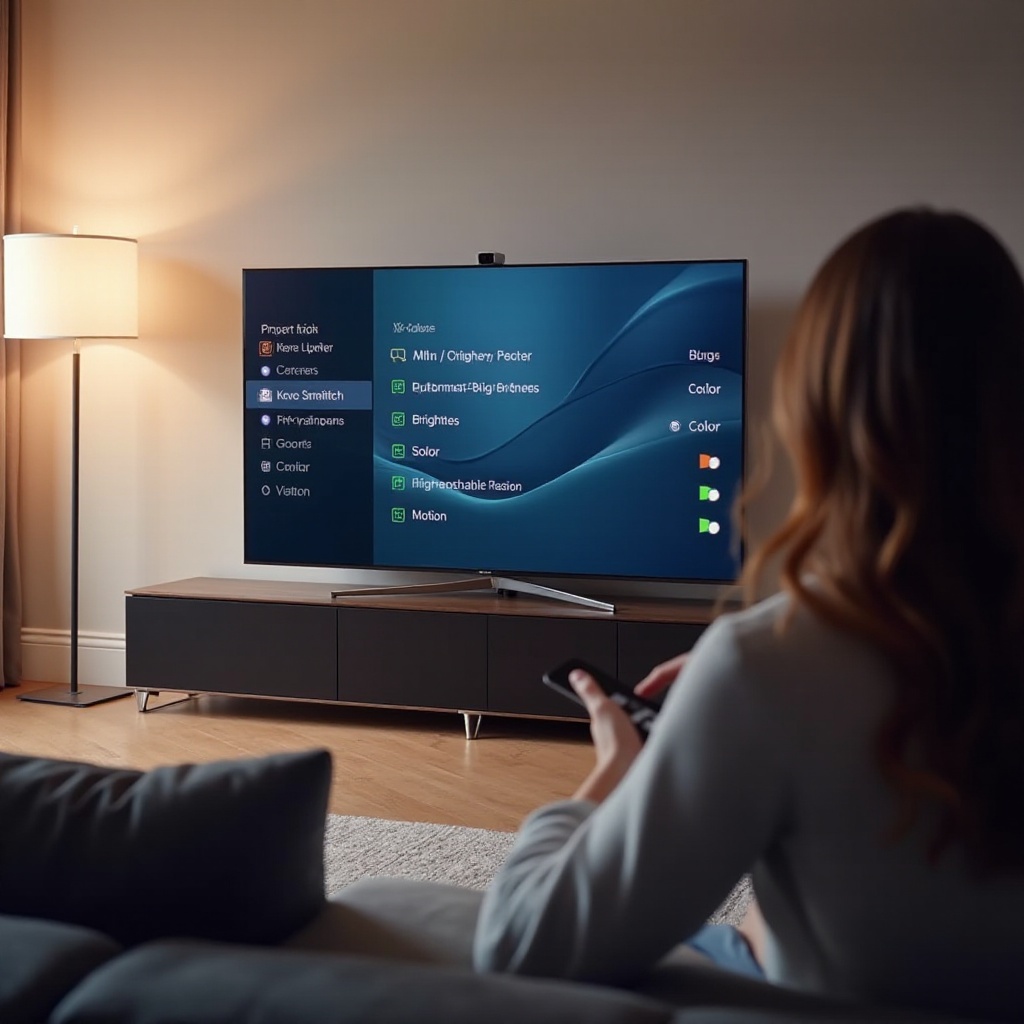
When to Buy and How to Save on a 65-Inch QLED
Prices move through the year. A little patience often upgrades you to a higher tier for the same budget.
Model cycles, price drops, and sale events
New QLED lines arrive around spring. Prices dip in late summer, with major deals during Black Friday, Cyber Monday, and big sports events. Track pricing for a few weeks to spot true lows and avoid fake discounts.
Warranty, returns, and credit card protections
Buy from retailers with easy returns and solid exchange policies. Some credit cards extend the manufacturer warranty and offer price protection. Keep the receipt, take unboxing photos, and test all ports within the return window.
Open-box and refurbished: checklists
Inspect panels for banding, dead pixels, and uniformity issues before accepting. Confirm the remote, stand, and power cable are included, and update firmware day one. Ask for the remaining warranty in writing and confirm the serial number on your receipt.
Conclusion
A great 65 inch QLED blends high brightness, precise dimming, and a fast, reliable OS. That mix delivers sharp HDR movies, smooth daytime sports, and responsive games in almost any room. Start with a quick pick that matches your habits, then verify panel type, motion, HDR formats, ports, and smart features. If you game, prioritize 4K at 120 Hz, VRR, and eARC for your sound system. If your room is bright, focus on anti glare and sustained brightness. Finish with a simple calibration and separate day and night presets. Follow this plan and you will buy the best qled 65 inch tv for your space and enjoy it for years.
Frequently Asked Questions
Is a 65 inch QLED big enough for my room
For most living rooms and bedrooms, yes. Aim to sit about 7.5 to 10 feet away for mixed use so 4K detail looks crisp without strain. If you sit closer than 7 feet or seat many people across a wide sofa, consider 75 inches. In very bright rooms, prioritize a QLED with strong anti reflection and high sustained brightness.
Do I need HDMI 2.1 and 4K at 120 Hz if I do not game
Not strictly. HDMI 2.0 supports 4K streaming and Blu ray. But HDMI 2.1 adds future flexibility, often better processors, and eARC for higher quality audio. If you might add a next gen console or a gaming PC later, having two HDMI 2.1 ports is helpful. If you never game, put brightness, local dimming, and smart OS ahead of high refresh inputs.
QLED vs OLED for bright rooms at 65 inches
QLED usually wins in bright rooms due to higher peak and sustained brightness plus effective anti glare. OLED excels in dark rooms with perfect blacks and superb contrast. If you watch daytime sports or entertain with lots of ambient light, choose a bright QLED with strong dimming. If you watch mostly films at night, OLED can look more cinematic.