Introduction
Many shoppers search for routers made in usa because they want trustworthy gear, clearer supply chains, and better support. The challenge is that consumer networking hardware uses a global web of parts, and labels often blur the truth. You need a clear way to screen claims, compare options, and decide what matters most for your home or small business.
This guide delivers that clarity. You will learn what the labels mean, why fully domestic consumer Wi‑Fi routers are rare, and how to verify origin. You will see where US assembly is more common, what alternatives deliver strong security and support, and how to build a reliable router with open‑source software and transparent hardware. We start with a straight answer, then move step by step into verification, options, and decision making.
Quick Answer: Are Any Routers Made in USA for Home Use Today?
Short answer: finding a mainstream, consumer Wi‑Fi router that meets a strict made in usa standard is unlikely. Most home routers rely on chipsets, radios, and circuit boards made and assembled overseas. Some vendors advertise designed in usa or engineered in usa, and a few assemble higher‑end firewall or gateway appliances domestically. But the radios, boards, plastics, and power supplies usually come from global suppliers.
You still have viable options if domestic origin matters to you:
– Seek US‑assembled small‑business firewall appliances and add separate access points for Wi‑Fi.
– Choose vendors with US‑based support and transparent security policies.
– Build a router using an x86 mini‑PC or appliance, then pair it with enterprise‑style access points.
That quick reality check sets up the next question: what do the labels actually mean, and how should you read them?
What ‘Made in USA’, ‘Assembled in USA’, and ‘Designed in USA’ Actually Mean for Routers
Made in usa is a high bar. In plain terms, it means all or virtually all significant parts and processing are of US origin. For routers, that would cover the board, radios, plastics, and final assembly. Because chip fabrication, RF modules, and PCB production mostly happen abroad, common home Wi‑Fi gear rarely qualifies.
Assembled in usa means the product’s principal assembly happens in the United States and is substantial. Parts can be foreign. In networking, this often applies to firewall appliances or gateway boxes built and tested in US facilities using imported boards and radios.
Designed in usa, engineered in usa, or developed in usa describe design location, not manufacturing origin. These phrases can reflect strong engineering and support teams at home, but they do not guarantee US‑made hardware.
Understanding these differences explains why a strict made in usa label is uncommon for consumer routers. The next section shows how supply chains and economics drive that reality, and why you are more likely to find US assembly in business‑class gear.
Why Consumer Routers Rarely Qualify: Chipsets, Radios, and Global Supply Chains
Routers pack radios, chipsets, memory, and antennas into compact, low‑cost devices. Most of those parts come from a handful of global manufacturers. Wi‑Fi chipsets and RF modules are specialized and tied to overseas fabs. PCBs, plastics, and power supplies often come from Asia. Even if a company assembles and tests the unit in the United States, imported components dominate the bill of materials.
Consumer price pressure makes the problem harder. Retail routers compete at tight margins. Domestic manufacturing adds labor and logistics costs that most mass‑market products cannot absorb. By contrast, higher‑priced small‑business firewalls and industrial cellular routers sell on reliability, lifecycle, and support. Those factors are easier to justify with US assembly and testing.
Given those realities, you must verify any origin claim with care. Next, you will learn a simple, reliable process to separate marketing language from verifiable facts.
How to Verify Origin Claims: Labels, FTC Rules, FCC IDs, Vendor Disclosures
Marketers use many phrases. Your job is to sort marketing from evidence. Use this checklist to verify claims before you buy:
1) Read the device and packaging labels. Look for phrases such as made in usa, assembled in usa, or made in [country], plus qualifiers like with domestic and foreign components.
2) Check the product page and data sheet. Real disclosures often mention plant locations, assembly partners, or test facilities. Vague claims without specifics are a red flag.
3) Verify the FCC ID. Search the FCC database using the device’s FCC ID to see the grantee and test reports. This does not prove origin, but it shows who made and certified the radio.
4) Review warranty and support locations. US‑based support centers, RMA addresses, and phone hours indicate operational presence.
5) Ask the vendor directly. Request a written statement of origin and assembly, plus a parts and processing summary. Serious vendors can provide this on request.
6) Look for independent audits or certifications. Some companies publish supply‑chain audits or compliance documents that describe sourcing and assembly.
7) Know the standards. Made in usa requires almost all US content and processing. Assembled in usa requires substantial US assembly. Designed in usa does not indicate origin.
After you verify claims, focus your search where US‑assembled or US‑supported options are more common. The next section points to the segments that prioritize lifecycle, reliability, and support.
Where USA‑Made or USA‑Assembled Routers Are Most Common: SMB, Industrial, and Cellular
You will have better luck in segments that value reliability and support over the lowest price:
– SMB and branch gateways: Firewall and router appliances, desktop or rackmount, often assembled and tested in US facilities. They prioritize updates, long lifecycles, and live support.
– Industrial and cellular routers: 4G and 5G gateways for failover or remote sites. Some vendors assemble certain models domestically and offer field‑replaceable parts and extended service contracts.
– Specialized networking appliances: Network security platforms and SD‑WAN edges built‑to‑order, sometimes with final assembly and QA in US plants.
These categories rarely include integrated consumer Wi‑Fi radios. Instead, you combine a wired router or firewall with separate access points. That split design increases flexibility and usually improves coverage. If you still want a more consumer‑friendly path with strong support and privacy, consider the smart alternatives in the next section.
Smart Alternatives to ‘Routers Made in USA’: US‑Based Firmware, Support, and Cloud Management
Country of origin is one factor. Ongoing security and support often matter more. Strong alternatives include:
– Vendors with US‑based support and RMA operations for faster help and clearer accountability.
– Transparent update policies and long support windows, including frequent firmware releases and public changelogs.
– US‑hosted or region‑selectable cloud management, with clear data residency and privacy policies.
– Open‑source friendly platforms that publish code or support open firmware where licensing allows.
– Separate access points managed locally, so you avoid cloud lock‑in and can upgrade Wi‑Fi on its own cycle.
If you want maximum control and a documented supply chain, you can also build a router using a small x86 or ARM appliance. The next section outlines that path step by step.
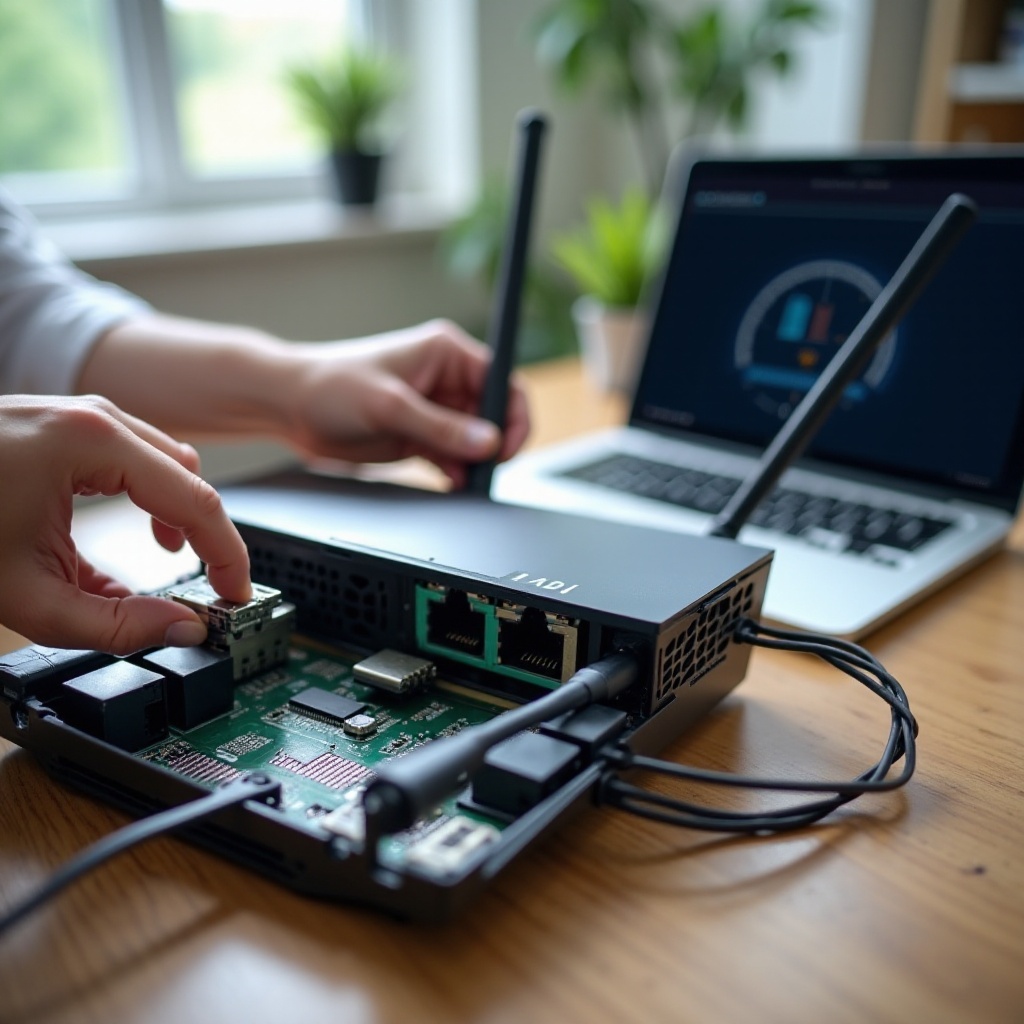
Build Your Own: A Secure Router Using US‑Assembled Hardware and Open‑Source Router OS
A DIY router gives you transparency, performance, and long support life. Here is a simple approach:
1) Choose hardware:
– Small x86 appliance or mini‑PC with at least two Intel‑class Ethernet ports.
– Prefer US‑assembled chassis and power supplies where possible.
– Add an uninterruptible power supply for clean power and graceful shutdowns.
2) Pick your router OS:
– pfSense, OPNsense, or VyOS are proven options with frequent updates.
– Match the OS to your comfort level and features you need, such as QoS, VPN, VLANs, and multi‑WAN.
3) Add Wi‑Fi:
– Use separate access points placed for coverage. Ceiling‑mounted APs often deliver better performance than consumer all‑in‑ones.
– Run Ethernet backhaul where you can; use wired uplinks to avoid wireless hops.
4) Configure the basics:
– Update BIOS and NIC firmware, then install the router OS from USB.
– Set WAN and LAN, enable DHCP, and apply baseline firewall rules.
– Turn on automatic updates and schedule configuration backups.
5) Harden and monitor:
– Configure DNS filtering and secure remote access using keys or a VPN.
– Enable detailed logs and set alerts for new devices or link flaps.
– Test failover if you use dual WAN or cellular backup.
This modular design delivers clear, controllable components and a predictable lifecycle. With a stable platform in place, you can focus on the security and privacy practices that keep any router trustworthy, regardless of origin.
Security and Privacy Considerations Beyond Country of Origin
A safe network depends on process as much as hardware. Focus on these essentials:
– Updates: Apply firmware and OS updates quickly. Automate checks and maintenance windows.
– Defaults: Change default passwords, disable unused services, and limit admin interfaces to trusted networks.
– Encryption: Use WPA3 for Wi‑Fi and strong ciphers for VPNs.
– Segmentation: Place IoT devices on a separate VLAN or guest network, and block lateral movement.
– Backups and monitoring: Keep off‑device backups of configs, and watch logs for anomalies.
– Supply chain: Buy from authorized channels to avoid tampered gear.
– Transparency: Favor vendors that publish advisories, CVE timelines, and remediation guides.
These practices reduce risk across devices from any country. To wrap up your decision, use a concise checklist and decision path that reflects your priorities.
Buyer’s Checklist and Decision Tree for ‘Routers Made in USA
Use this checklist to evaluate any candidate device:
– Clear origin statement: made in usa, assembled in usa, or designed in usa, with qualifiers.
– Written verification available on request, including parts and processing summary.
– Frequent firmware updates with public changelogs and defined end‑of‑life dates.
– US‑based support options and region‑selectable cloud management if used.
– Warranty length, RMA location, and expected lifecycle.
– Performance that meets your bandwidth, latency, and device count.
– Ability to pair with separate APs if Wi‑Fi coverage is critical.
Decision path:
– Need strict made in usa: Focus on SMB or industrial appliances and request detailed origin documentation. Pair with separate access points.
– Need US assembly plus strong support: Target SMB gateways from vendors with clear SLAs and domestic service centers.
– Need consumer simplicity: Choose a well‑supported imported router with transparent updates and add privacy controls like DNS filtering and strong Wi‑Fi encryption.
– Want maximum control: Build your own appliance with open‑source software and carefully chosen components.

Conclusion
Routers made in usa is a nuanced goal in a global hardware market. Few consumer Wi‑Fi routers meet a strict domestic origin standard, but you can still buy confidently. Verify claims, favor vendors with clear updates and US‑based support, and consider SMB‑class appliances where US assembly is more common. If you want ultimate control, build your own router with open‑source software and modular Wi‑Fi.
Security, reliability, and lifecycle support often matter more than a label. Use the checklists and steps in this guide to align your purchase with your budget, performance needs, and risk tolerance. With a documented process and a clear plan, you will end up with a network that is easier to maintain and safer for everyone who uses it.
Frequently Asked Questions
Are any consumer Wi‑Fi routers truly made in USA, and how can I tell?
They are rare. Most consumer routers use imported chipsets, radios, and boards. To verify a claim, read the device label and packaging, check the product data sheet, and ask the vendor for a written origin statement that explains parts and processing.
What is the difference between made in USA and assembled in USA for routers?
Made in USA means all or nearly all parts and processing are domestic, a very high bar for electronics. Assembled in USA means the main assembly happens in the US but many parts can be foreign. Always request written details to confirm what the label implies.
Are US‑made or US‑assembled routers more secure than imported routers?
Origin alone does not guarantee security. Strong security depends on frequent updates, transparent advisories, good defaults, and careful configuration. A well‑maintained imported router can be safer than a poorly maintained domestic one.